
The farther we go, the father we see.
Today I uncovered a collection of poems I’d penned about my late Father…
No Son Should See This
Dead roses outside
the council flat
cigarette butts
in a marmite jar
The Maori lady from next door says
‘No son should see this’
The fruit bowl empty
amber circles inside a mug
like dirty Olympic rings
He always was
a gold medalist with the booze
Three shirts hung
with razor crease
and tobacco smell
half a tube of toothpaste
the life squeezed out
Blood in the sink
‘No son should see this’
Some Maori Chief
I saw him once
on the ferry to Waiheke
hair eroded by the wind
tussock clinging to a dune
I sat beside him
watching Devonport shimmer
both shivering in our summer shirts
he too drunk to know
I watched him
stumble up the quay
a sailor’s bandy leg
and by the statue of some Maori chief
he turned his head
and shoulders back
he smiled
e taku tama
Always Fixing Things
He put a hole in his hand
with the blade of a screwdriver
Always fixing things
slipped on a worn screw
blood on the Herald
He put a hole in his hand
with the blade of a screwdriver
Always fixing things
like Jesus Christ
blood of the Herald
hole in His hand
Spider
“Goodnight Spider”
his nickname for me
whispered in my ear
with beery breath before he left
for battle with my mother
There was a spider
webbed in silver thread
in the Manuka tree outside
my bedroom window
And as the battle raged
I shone a torch
and watched the creature
watching me
With beery breath?
Arachnid in his tree
Whispering something just for me
And I wished to God that I was he
“Goodnight Spider”
The Thing That Parents Do
We had no car
So Dad and I
walked to school
one night when I was ten
to see my teacher
and talk of why
I was so shy
and why I thought
clouds so interesting
The thing that parents do
I had no fear
Of what my teacher might say
that night when I was ten
My Dad was there
On children’s chair
The thing that parents do
And on the way home
Streetlights shone
and I could smell Old Spice on his collar
he smoked and talked
My Dad and I
The thing that parents do
Smoke Curl
He was burnt to ash
And I didn’t know
I was preaching about Lazarus
But he didn’t come forth
An old friend attended the funeral.
Wondered why I wasn’t there
Dust to dust
Ashtray to ashes
Just the funeral director
and her
Watching the smoke curl
He always liked that
So he was burnt to ash
How could I know?
Our conversations were
stubbed out long ago
Lazarus, come forth!
Thirty Years of Spew
Today marks an important milestone in New Zealand’s history.
On this day, in 1967, children across the nation rejoiced to the news that compulsory free milk in schools would cease!
Hallelujah.
The poor lactose-intolerant kids got a break. No more bloating, diarrhea, or gas.
The rest of us, ( I was 8 at the time ) thanked whatever gods were handy, and school caretakers fell to their corduroy knees in giddy genuflection.
No more would they have the daily chore of mopping up milk-spew.
I should perhaps back up the milk tanker, and explain the lacteous, back-story of free milk in New Zealand Primary Schools.
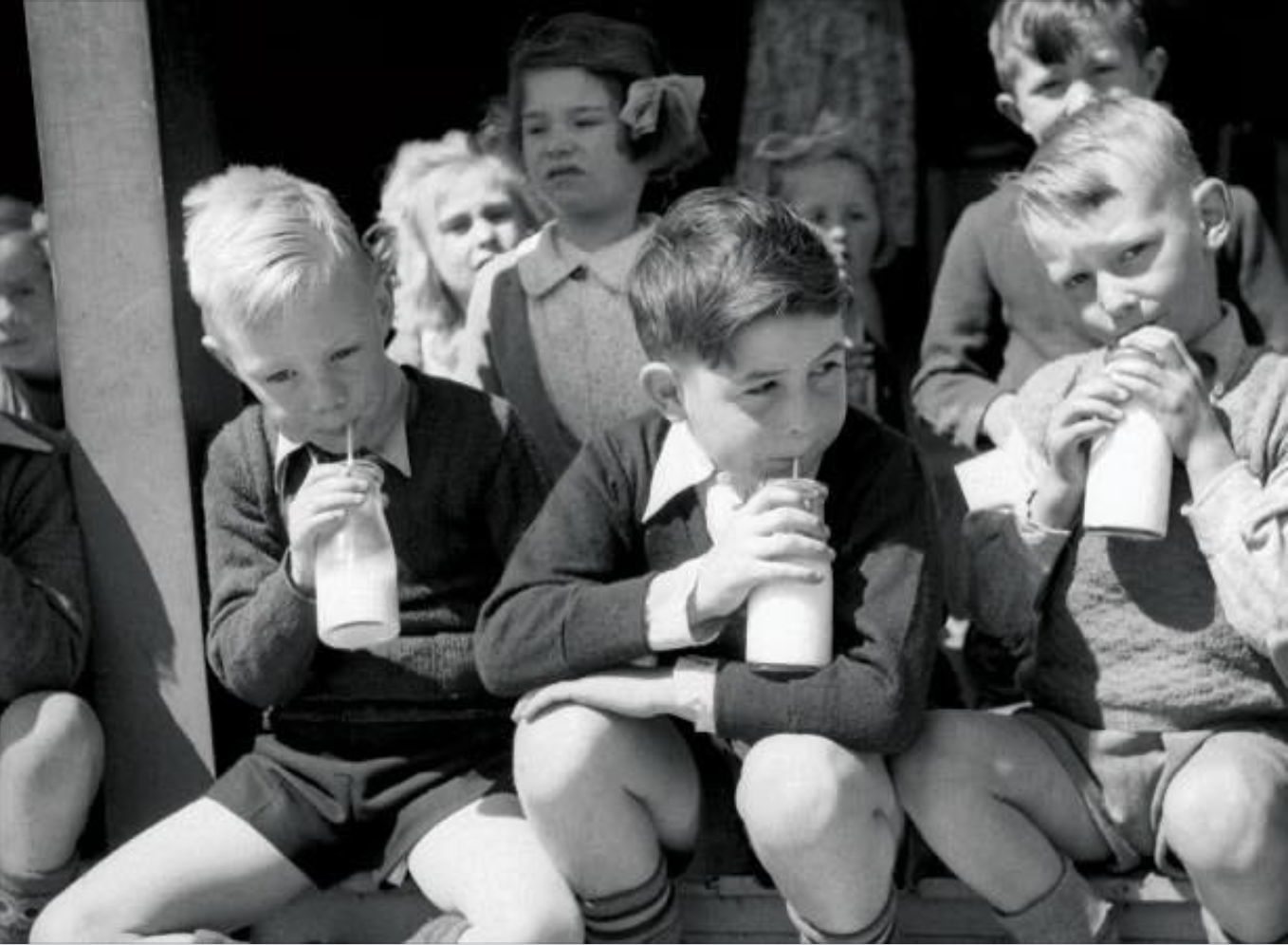
In 1937, the newly minted Labour Government, awash with frothy socialism, and an ever-increasing milk glut, decreed that all Primary-aged children would receive a free half-pint (284 ml) of milk each day. Whether they liked it or not.
“To improve the health of young New Zealanders!” wheezed the two-pack-a-day politicians.
Forthwith, crates of half-pint glass bottles would arrive at the school-gate each morning.
And then, sit in the sun, contentedly coagulating, until, hours later, the Milk Monitors would distribute the luke-warm horror to the students, formed in snotty lines like a prison cafeteria.
The glass bottle had a cardboard top through which a straw was pushed, and, whilst the prison staff watched with hawk-eyed intensity, each student was compelled to glug their curdled quota. Pleas for dispensation fell on deaf ears.
Then, to add to this indecency, the bell would ring, announcing Playtime, which involved compulsory running about and being ‘active’.
It felt as though you were carrying a half-full water balloon, sloshing mucously about your gut.
Inevitably, the spewing would start.
Spewing went by many, glourious, sobriquets; chundering; chucking up; liquid laugh; or my personal favourite, a technicolour yawn.
At this point, the school caretaker would grumpily emerge from his benzene and fertiliser-fumed shed, to dispense a bucket of sawdust on the offending puddle.
The poor kid, who had a shirtfront splattered with what looked like a can of creamed corn, would be hustled away to the sick bay to detox.
This scenario played out in schools across our dairy-centric paradise from 1937 to 1967.
Thirty Years of Spew.
It was then deemed too costly, and the experts were starting to question the health benefits of milk anyway.
I could not have cared less.
As far as I was concerned, it was all one, very big, technicolour yawn.
Stuff
It All Begins Here
It’s an eight-hour drive south from Auckland to Wellington.
642km.
Plenty of time to think about my father-in-law’s passing and the
sad, empty shell of a house that had once been his home.
Empty of love and laughter and the memories that curl like wallpaper
in the corners.
But not empty of stuff.
Material stuff. The stuff that you accumulate and curate and hoard and say
“that’ll come in handy one day”.
It never does. It just sits in boxes and jars, in cupboards and closets.
Stuff.
Like geological layers, each strata telling it’s own tale.
Births, weddings, deaths, insurance forms, recipes torn from the Woman’s Weekly. So many knives and forks! And how many hammers does one man need?
And now it was time for a geological dig.
A clearing of the strata of stuff.
A Garage Sale.
In North America, it’s a Yard Sale; in UK, a Jumble or Boot Sale.
Here, in New Zealand, it’s called a Garage Sale.
Same concept.
The Sale of Stuff.
Although, as I found out, the meaning can be lost in translation.
A Pakistani neighbour of my father-in-law, on seeing the hand-painted ‘Garage Sale’ sign, wished to know why I was selling the garage, and how much I wanted for it!
“I’m just selling the stuff that’s in the garage.”
A van pulled up to the garage door, earlier than advertised.
Such is the way with Garage Sales.
Early bird gets the worm. Vultures circle?
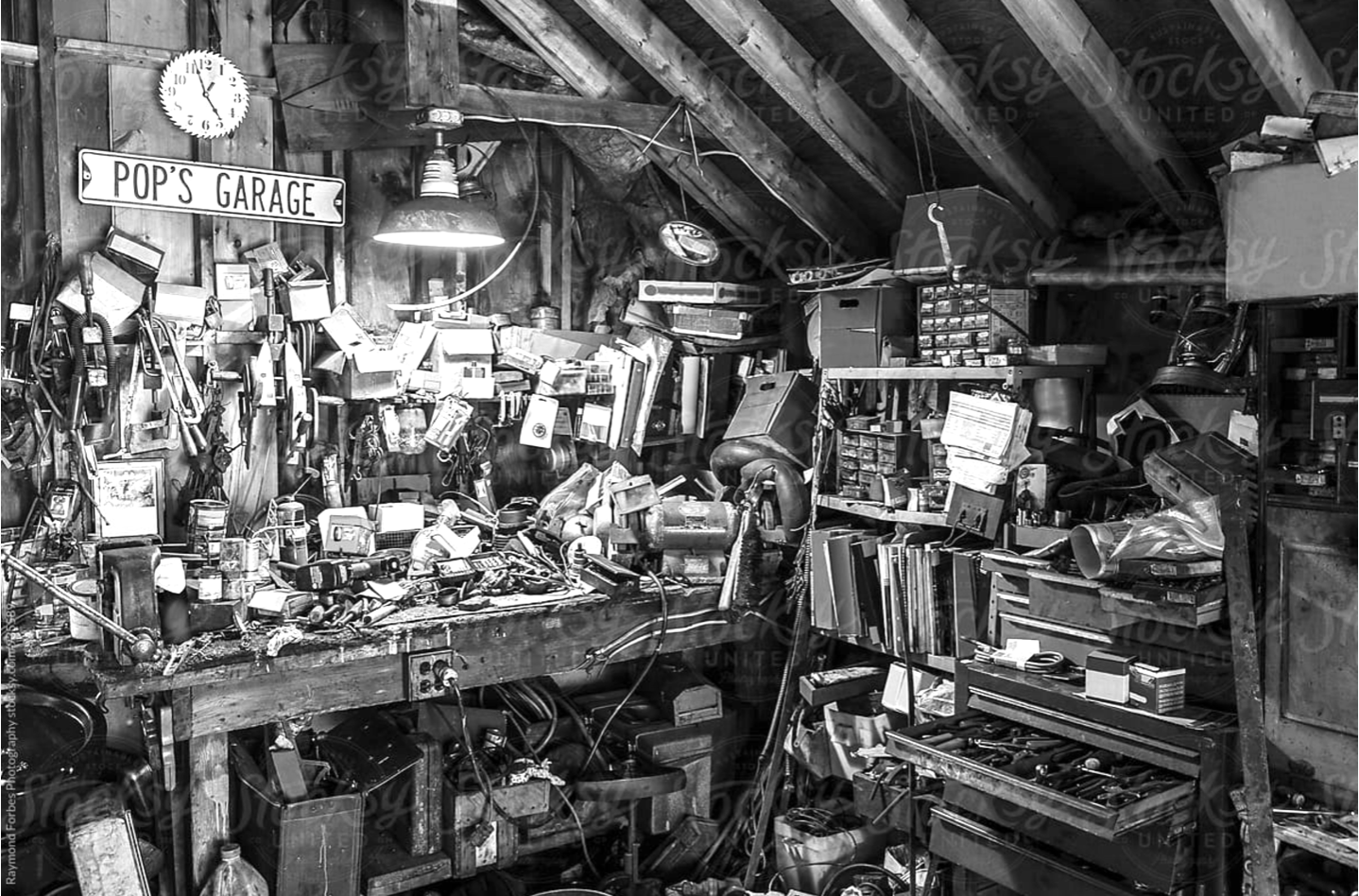
He quickly assessed the many wooden boxes jumbled with tools and nuts and bolts. The old power tools and the jars of widgets and what-nots.
“Whaddya want for the lot?”
“The lot?”
Yeah, I’ll take everything. Whaddya want?”
I had anticipated a full day of haggling.
A day in which many people would arrive at my Garage Sale and thoughtfully pick over the remnants of my father-in-law’s life.
I had braced myself for the emotional roller-coaster that the sale of each individual item would entail.
The memory of him doing this with that, and that with this.
Now, at 8am on a sunny Sunday in Karori, Wellington, standing in that cluttered garage, I’m asked..
“So, whaddya want?”
It took my father-in-law 93 years to collect all this stuff.
But only a minute to get rid of it.
“500 bucks?”
A handshake, a van load, an empty garage.
Which matched the emptiness I felt.
I drove 642km north.
And all the way back, all I could think of was …
stuff.